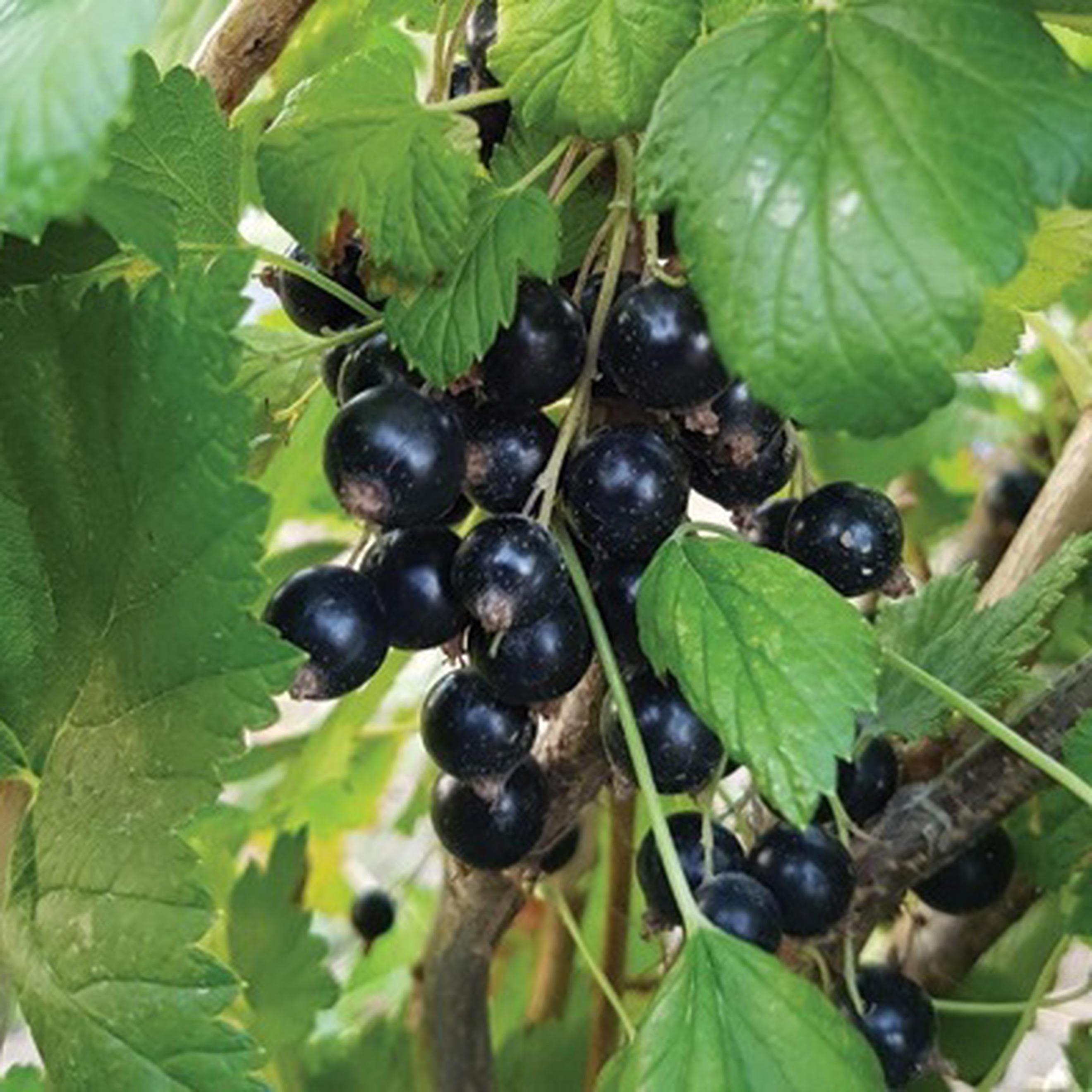
Blackcurrant - "B. Sarek"
Ben Sarek is slightly less vigorous than Titania but is very hardy and naturally compact. It produces large berries with superior fresh-eating quality and shows good tolerance to American powdery mildew, along with moderate resistance to white pine blister rust.
This cultivar was developed by the Scottish Crop Research Institute. If choosing between the two, Titania stands out for disease resistance, while Ben Sarek is preferred for its fruit quality.
Blackcurrants are small, round berries about 1 cm in diameter that ripen from dark purple to nearly black. They are among the earliest fruits to harvest (mid–late July) and can remain on the bush for some time; waiting about a week after they turn black improves sweetness and flavour.
The berries are firm, juicy, and both sweet and tart, prized for their uniquely bold aroma. While they can be eaten fresh, blackcurrants are most often used in preserves and specialty products such as jelly, syrup, cordial, wine, and vinegar.
Nutritionally, blackcurrants are rich in antioxidants and are noted for anti-inflammatory, anti-rheumatic, and diuretic properties. They are especially popular in Scandinavian home gardens, where hot blackcurrant juice is a traditional cold remedy. The dried leaves are also edible and used for herbal teas and refreshing drinks like Finland’s “Louhisaaren Juoma.”
This attractive, self-fertile shrub is extremely cold hardy (Zone 3, to about −42 °C) and is among the first plants to bud in spring. Mature plants reach about 1.8 m (6 ft) tall and 1.5 m (5 ft) wide, making them excellent for edible hedges (about 10 plants per 12 m / 40 ft).
Blackcurrants prefer rich, moist, well-drained soil and grow well in full sun to partial shade, though some afternoon shade is beneficial in very hot climates. For best productivity, regularly prune older (4–5-year-old) shoots.